
Kidney Health Interpreter
Comprehensive kidney health assessment. Stages CKD risk and all-cause mortality risk on the KDIGO heatmap, helps to identify the type of dysfunction and calculates kidney failure risk. Not meant for acute kidney injury (AKI), only use for stable conditions.
KDIGO Prognosis Heatmap
Persistent albuminuria categories →↓ GFR categories (mL/min/1.73m²) | A1 Normal to mildly increased <30 mg/g | A2 Moderately increased 30–300 mg/g | A3 Severely increased >300 mg/g | |
|---|---|---|---|---|
| G1 | Normal or high ≥90 | Screen | Treat | Treat and refer |
| G2 | Mildly decreased 60–89 | Screen | Treat | Treat and refer |
| G3a | Mildly to moderately decreased 45–59 | Treat | Treat | Treat and refer |
| G3b | Moderately to severely decreased 30–44 | Treat | Treat and refer | Treat and refer |
| G4 | Severely decreased 15–29 | Treat and refer | Treat and refer | Treat and refer |
| G5 | Kidney failure <15 | Treat and refer | Treat and refer | Treat and refer |
Enter creatinine, cystatin C, or urine markers to plot your position on the heatmap.
Biomarkers used in this tool
Values as entered. An arrow marks a value outside the optimal range.
age: —; Gender: —; Creatinine: —; Cystatin C: —; Albumin (urine): —; Creatinine (urine): —; Protein (urine): —
Open in Browser for Full Features
Access interactive features, detailed explanations, and AI interpretations.
If printed on paper

If this is a PDF document
Why this beats ChatGPT
Unlike a general-purpose LLM, Kidney Health Interpreter visually maps your results using validated calculations, evidence-based optimal risk ranges, and KDIGO guidelines, providing consistent risk estimates and actionable next steps.
All research is done by humans. AI helps with coding and refining text for better readability.
Optimal ranges, not just “normal”
Generic AI uses normal lab ranges (based on population averages). This tool uses functional, best-outcome targets.
Evidence-locked math. Not hallucinations
Generic AI chatbots don’t know which calculated indices are best or their optimal cutoff values.
Clinically significant differentials
We run relevant differential diagnosis calculations, but only when it's clinically significant.
Privacy by default
Everything happens in your browser and no personal or medical information leaves your computer.
About the site author
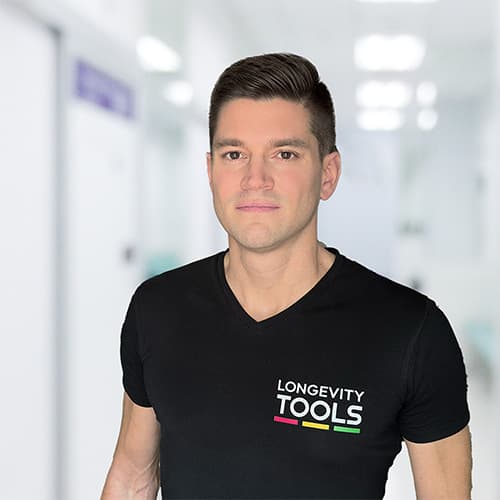
My personal mission is to extend human lifespan by collectively adding 1 million years to people's lives.
That’s why I made this site 100% free, no sign-up, no email. Just instant results.
Zsolt Szabo Founder, Longevity-tools.comPrecision health consultant for labs and clinics
