
hsCRP in Serum
hsCRP is just a more sensitive version of the standard CRP test (they measure the same analyte). The standard CRP test is less sensitive and is usually only used to detect acute inflammation, while hsCRP can detect lower levels of inflammation and is often used to assess cardiovascular risk.
hsCRP ranges for
What a high value may mean:
Common reasons for high hsCRP:
- ,
High hsCRP most often reflects active inflammation: recent infection, injury, surgery, autoimmune or inflammatory disease, periodontal disease, or other tissue injury. Repeat when clinically stable; persistent values above 10 mg/L warrant non-cardiovascular evaluation.
Chronic low-grade elevation is commonly linked with adiposity and cardiometabolic risk: insulin resistance, metabolic syndrome, NAFLD, sleep apnea, smoking, sedentary behavior, and estrogen/progestin therapy.
Images:

CRP increases 3-5 fold during aging
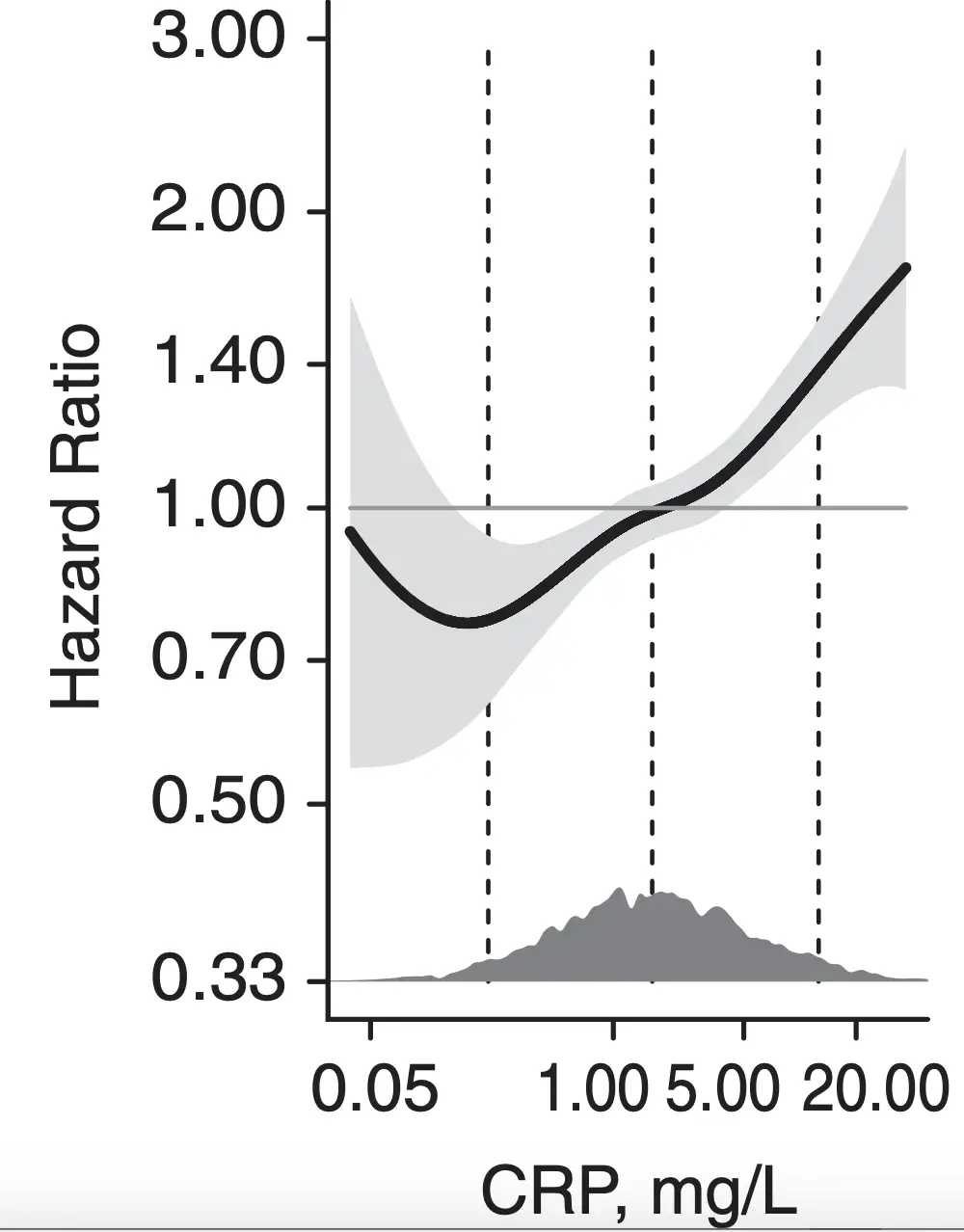
High CRP was associated with substantial rise in mortality
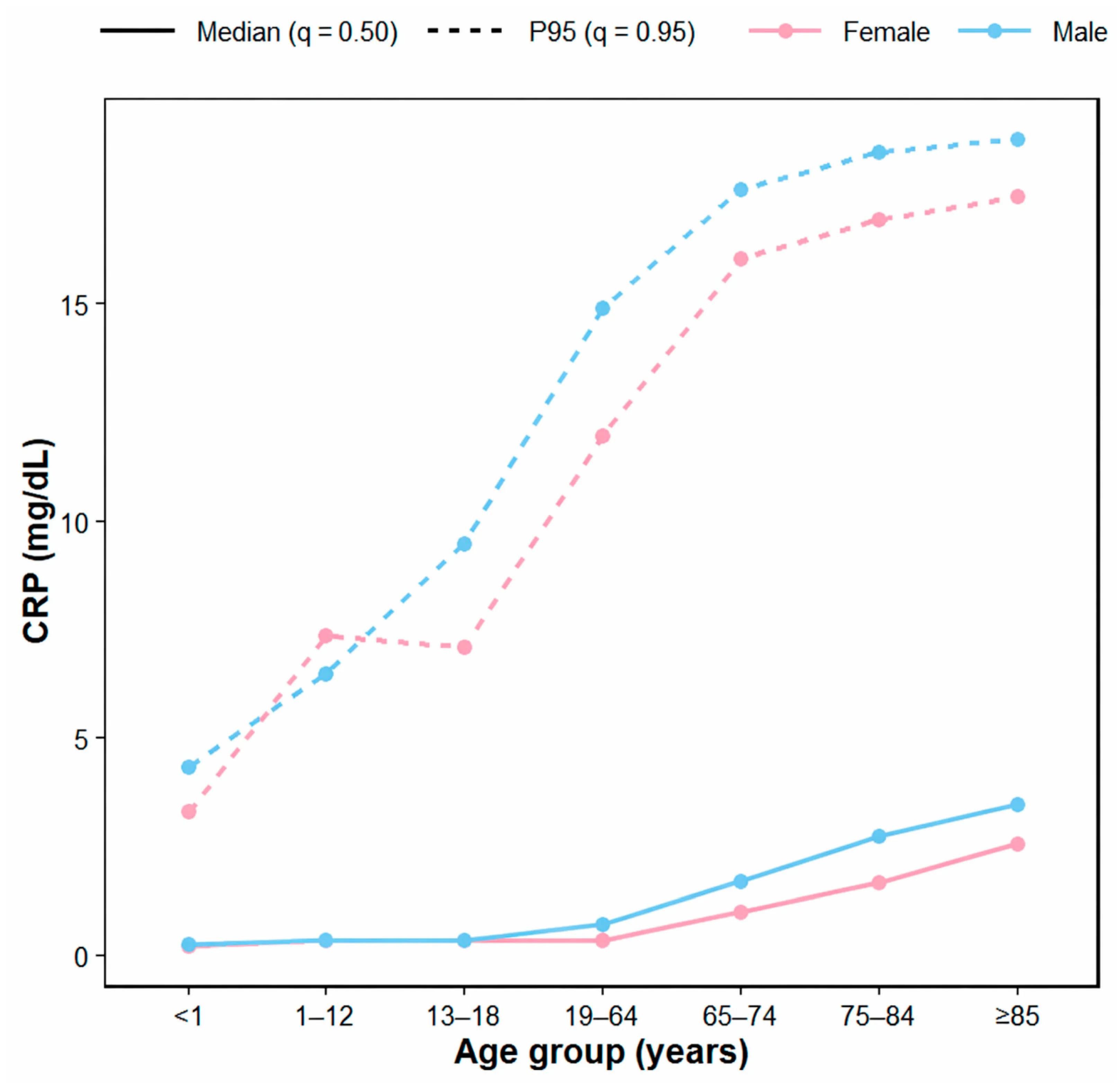
CRP increases during aging
Open in Browser for Full Features
Access interactive features, detailed explanations, and AI interpretations.
If printed on paper

If this is a PDF document

About the site author
My personal mission is to extend human lifespan by collectively adding 1 million years to people's lives.
That’s why I made this site 100% free, no sign-up, no email. Just instant results.
Zsolt SzaboPrecision Health Consultant for Longevity Clinics