
Folate in Serum
Folate ranges
What a low value may mean:
Common reasons for low Folate:
- ,
Low folate usually reflects inadequate intake — diets low in leafy greens and legumes, or losses from prolonged cooking (folate is heat-labile).
Other causes: malabsorption (celiac disease, IBD, bariatric surgery), chronic alcohol use, increased demand (pregnancy, lactation, chronic hemolysis, exfoliative skin disorders), and folate-depleting medications (methotrexate, sulfasalazine, trimethoprim, phenytoin and other anticonvulsants, metformin).
What a high value may mean:
Common reasons for high Folate:
High folate is most often intake-driven — recent folic acid or B-complex supplementation, fortified foods, or a high-folate meal, since serum folate reflects intake over the preceding days.
It can also accompany vitamin B12 deficiency (the "methyl-folate trap"), where folate accumulates as methyl-THF and can mask the underlying B12 deficiency. Reduced kidney clearance can also raise levels.
Images:
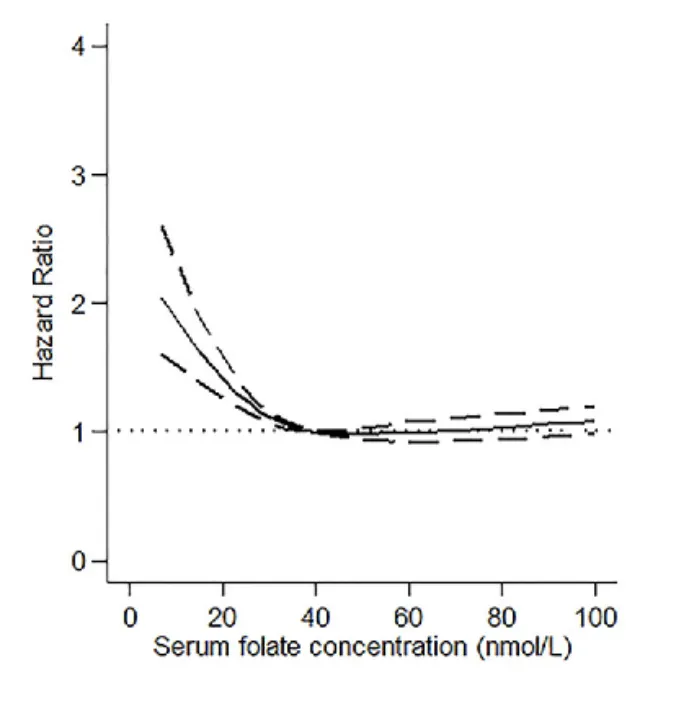
Low folate was associated to substantial rise in all-cause mortality
Open in Browser for Full Features
Access interactive features, detailed explanations, and AI interpretations.
If printed on paper

If this is a PDF document

About the site author
My personal mission is to extend human lifespan by collectively adding 1 million years to people's lives.
That’s why I made this site 100% free, no sign-up, no email. Just instant results.
Zsolt SzaboPrecision Health Consultant for Longevity Clinics