
PLT
PLT ranges for
What a low value may mean:
Common reasons for low PLT:
- ,,,
Low platelets (thrombocytopenia) may reflect reduced marrow production, increased destruction or consumption, splenic sequestration, or dilution. If the result is unexpected or isolated, first consider pseudothrombocytopenia from platelet clumping and confirm with a repeat count or smear.
Common settings include marrow suppression or infiltration (B12/folate deficiency, alcohol, chemotherapy, aplastic or malignant marrow disease), immune or drug-induced thrombocytopenia, infection/sepsis, consumptive microangiopathic processes (DIC, TTP/HUS, HELLP), hypersplenism, and chronic liver disease or portal hypertension.
What a high value may mean:
Common reasons for high PLT:
- ,,,
High platelets (thrombocytosis) are most often reactive / secondary, especially with iron deficiency, inflammation, infection, recent bleeding or surgery, tissue injury, malignancy, or hyposplenism/splenectomy. In these cases, the platelet count often improves when the trigger resolves.
Persistent, unexplained, or marked thrombocytosis raises concern for a clonal myeloid disorder, especially essential thrombocythemia, polycythemia vera, primary myelofibrosis, or CML.
Images:
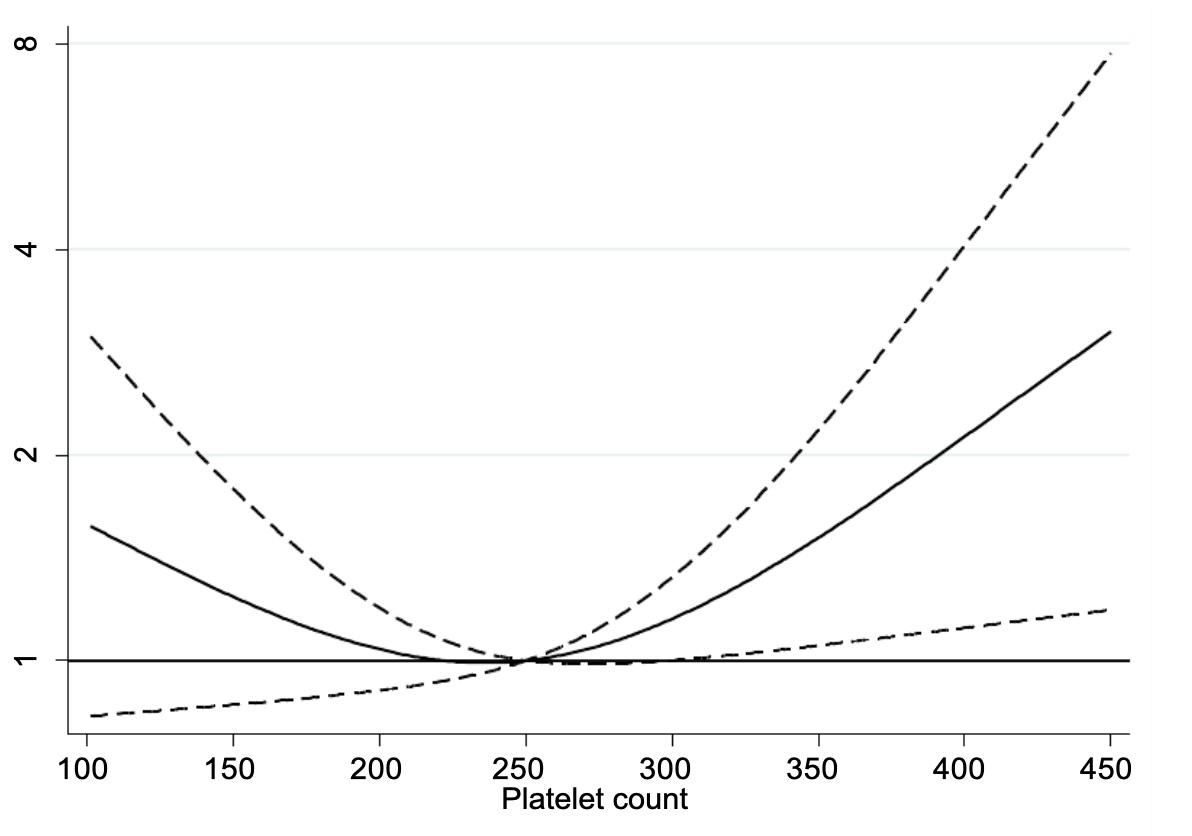
PLT was associated with all-cause mortality in males
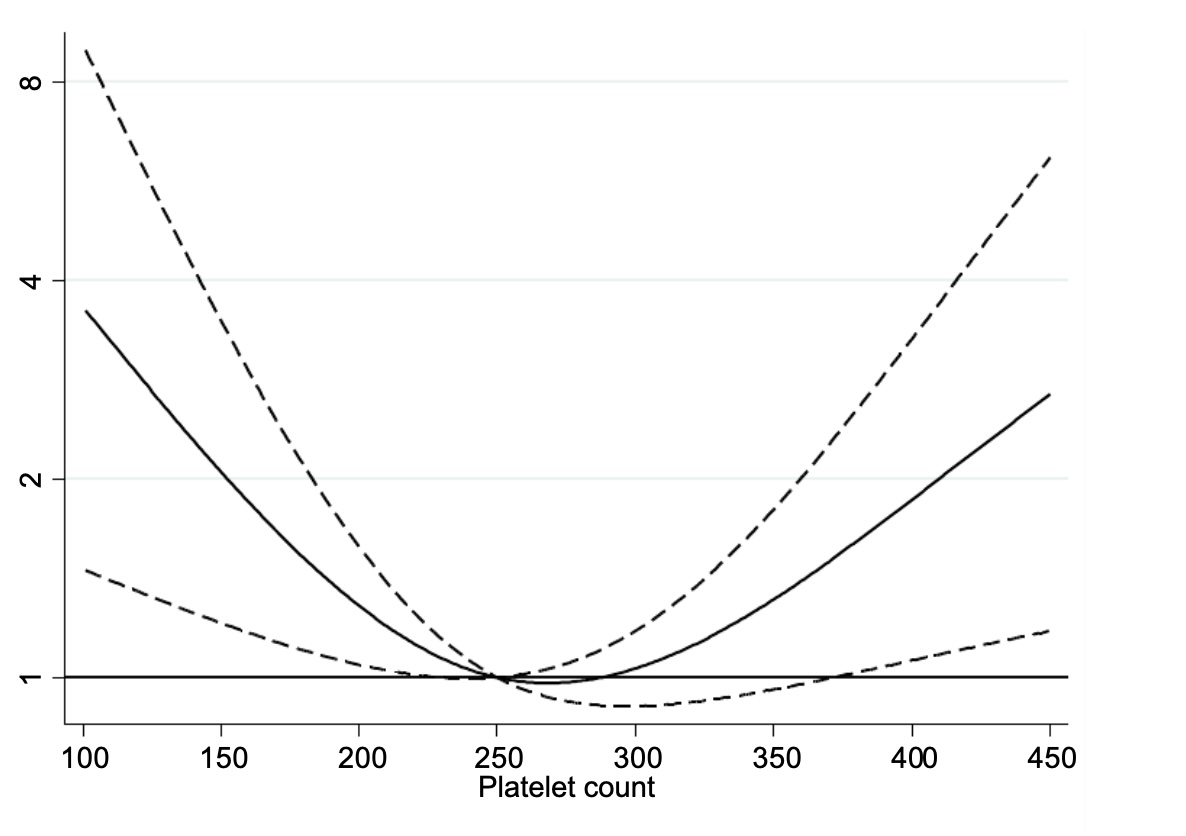
PLT was associated with all-cause mortality in females
Open in Browser for Full Features
Access interactive features, detailed explanations, and AI interpretations.
If printed on paper

If this is a PDF document

About the site author
My personal mission is to extend human lifespan by collectively adding 1 million years to people's lives.
That’s why I made this site 100% free, no sign-up, no email. Just instant results.
Zsolt SzaboPrecision Health Consultant for Longevity Clinics