
Neutrophils (Absolute)
Neutrophils (Absolute) ranges
What a low value may mean:
Common reasons for low Neutrophils (Absolute):
- ,,,
Inherited variation: A stable low count can reflect the Duffy-null (ACKR1) phenotype, which usually does not increase infection risk. Prior counts and the clinical context help distinguish this from acquired neutropenia.
Recent infection or medications: Viral illnesses can temporarily suppress neutrophils. Some antibiotics, antithyroid drugs, clozapine, immunosuppressants, and chemotherapy can also lower the count.
Nutrient deficiencies: Vitamin B12, folate, or copper deficiency and severe undernutrition, often accompanied by other blood-count abnormalities.
Less common: Autoimmune disease, an enlarged spleen, bone marrow disorders, or congenital neutropenia. Persistent unexplained reductions warrant further assessment.
What a high value may mean:
Common reasons for high Neutrophils (Absolute):
- ,,,
Infection and inflammation: Bacterial infections, inflammatory disorders, tissue injury, and recent surgery commonly raise neutrophil counts.
Lifestyle and temporary changes: Smoking and obesity can contribute to persistent mild elevations. Strenuous exercise and physical or emotional stress can cause temporary increases.
Medications: Corticosteroids, beta-agonists, lithium, and granulocyte colony-stimulating factors can increase circulating neutrophils.
For women: Pregnancy commonly raises neutrophil counts and requires pregnancy-specific reference intervals.
Less common: Previous splenectomy or myeloid blood disorders. Persistent unexplained elevations, especially with immature cells or other blood-count abnormalities, warrant further assessment.
Images:
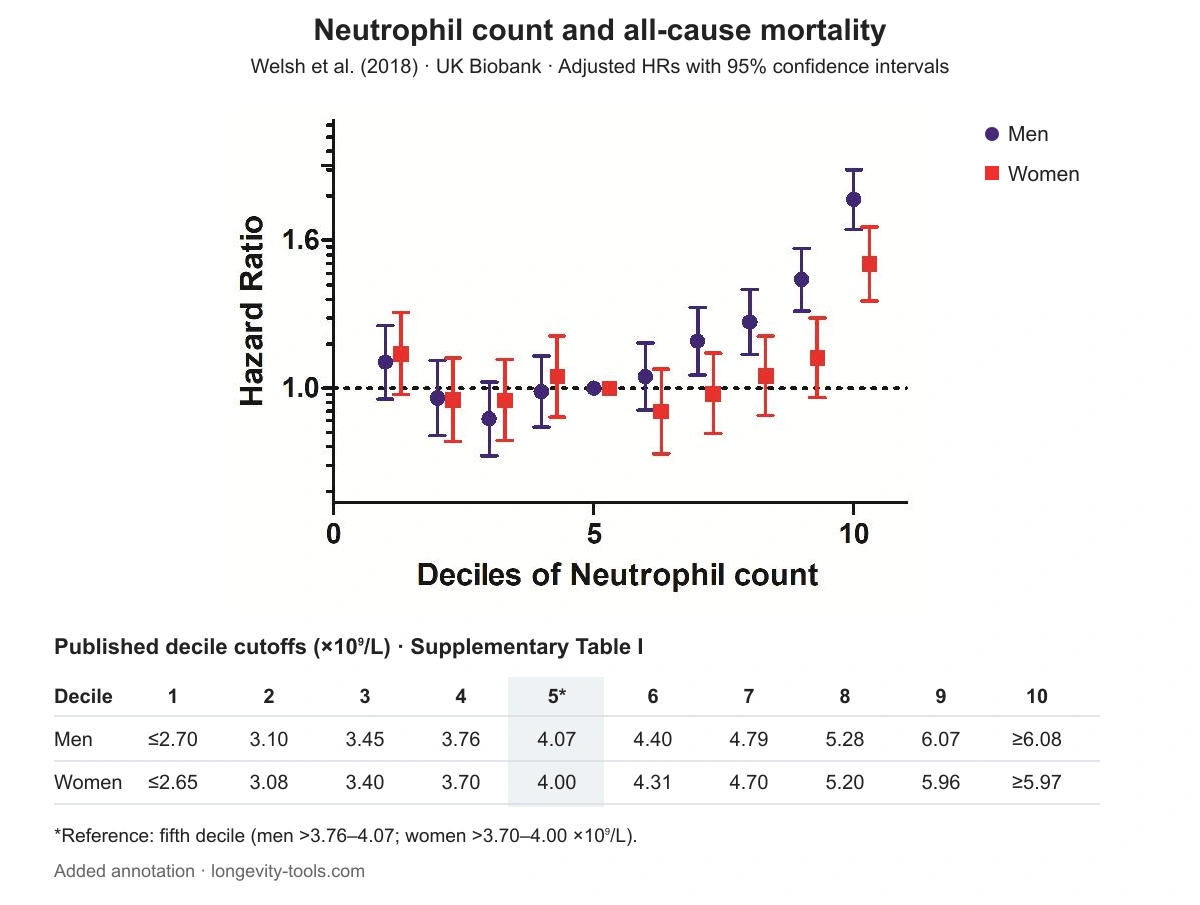
Mortality rose at high neutrophil counts, more steeply in men than in women
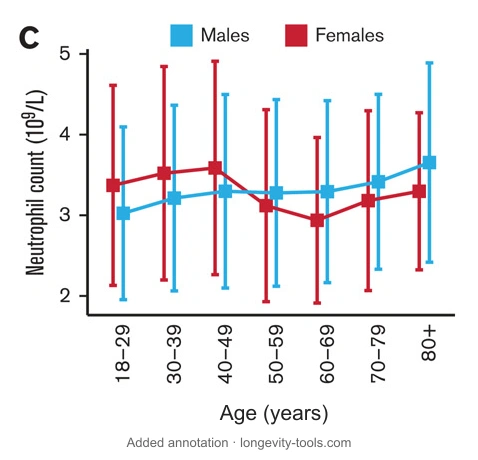
Age patterns in neutrophil counts differed between men and women
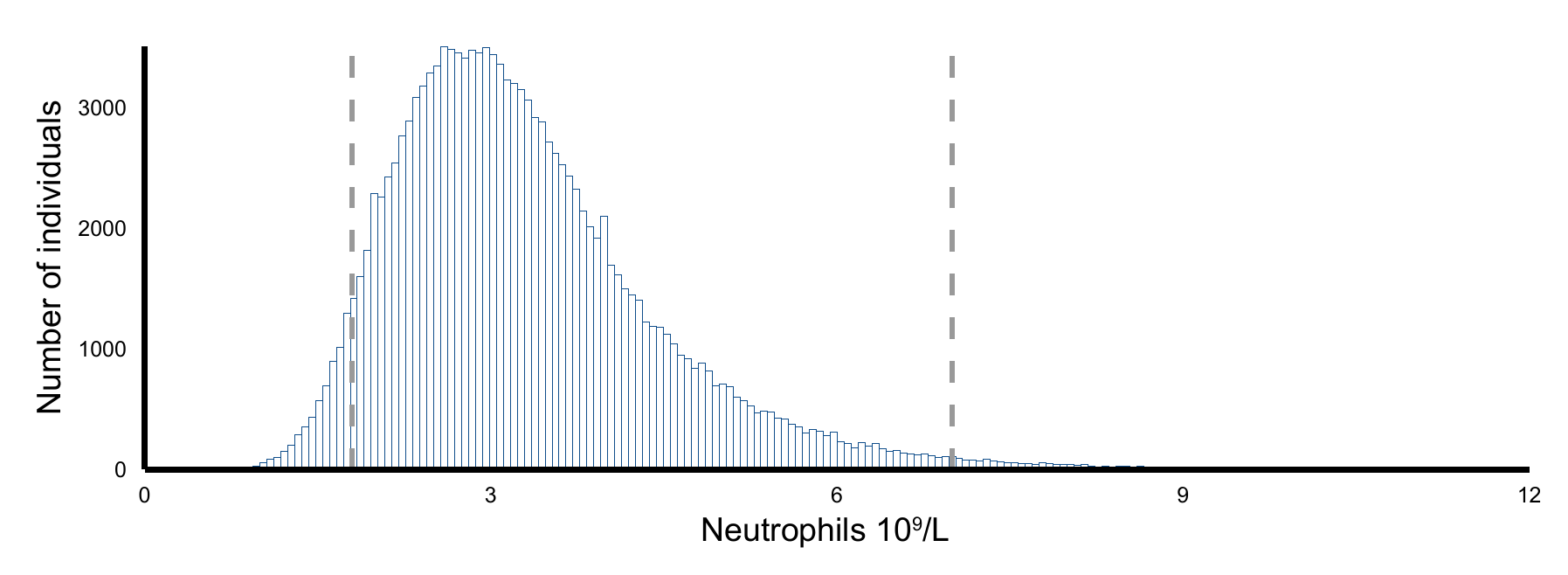
Neutrophil counts had a right-skewed population distribution
Open in Browser for Full Features
Access interactive features, detailed explanations, and AI interpretations.
If printed on paper

If this is a PDF document

About the site author
My personal mission is to extend human lifespan by collectively adding 1 million years to people's lives.
That’s why I made this site 100% free, no sign-up, no email. Just instant results.
Zsolt SzaboPrecision Health Consultant for Longevity Clinics