
Lymphocytes (Absolute)
Lymphocytes (Absolute) ranges
What a low value may mean:
Common reasons for low Lymphocytes (Absolute):
- ,,
Temporary changes: Recent viral illness, physical stress, or recovery after strenuous exercise can temporarily lower circulating lymphocytes.
Medications: Corticosteroids, other immunosuppressants, and chemotherapy can reduce lymphocyte counts.
Nutrition and alcohol: Protein-energy malnutrition, zinc deficiency, and excessive alcohol intake can contribute.
Other causes: Chronic infections such as HIV or tuberculosis, autoimmune disease such as lupus, chronic kidney disease, lymphoma, and rare inherited immunodeficiencies.
Persistent low counts: Interpret repeat measurements after recovery from acute illness. Persistent unexplained lymphopenia deserves further assessment, especially with recurrent or unusual infections.
What a high value may mean:
Common reasons for high Lymphocytes (Absolute):
- ,,
Infection: A reactive increase during viral illness, especially Epstein-Barr virus or cytomegalovirus infection, is common. Pertussis and some chronic infections can also raise the count.
Smoking: Smoking can cause a mild persistent increase.
Temporary changes: Acute stress or strenuous exercise can briefly increase circulating lymphocytes.
Other causes: Drug hypersensitivity reactions and previous splenectomy.
Persistent high counts: Unexplained elevation can reflect a lymphoproliferative disorder, such as chronic lymphocytic leukemia, particularly in older adults.
Images:
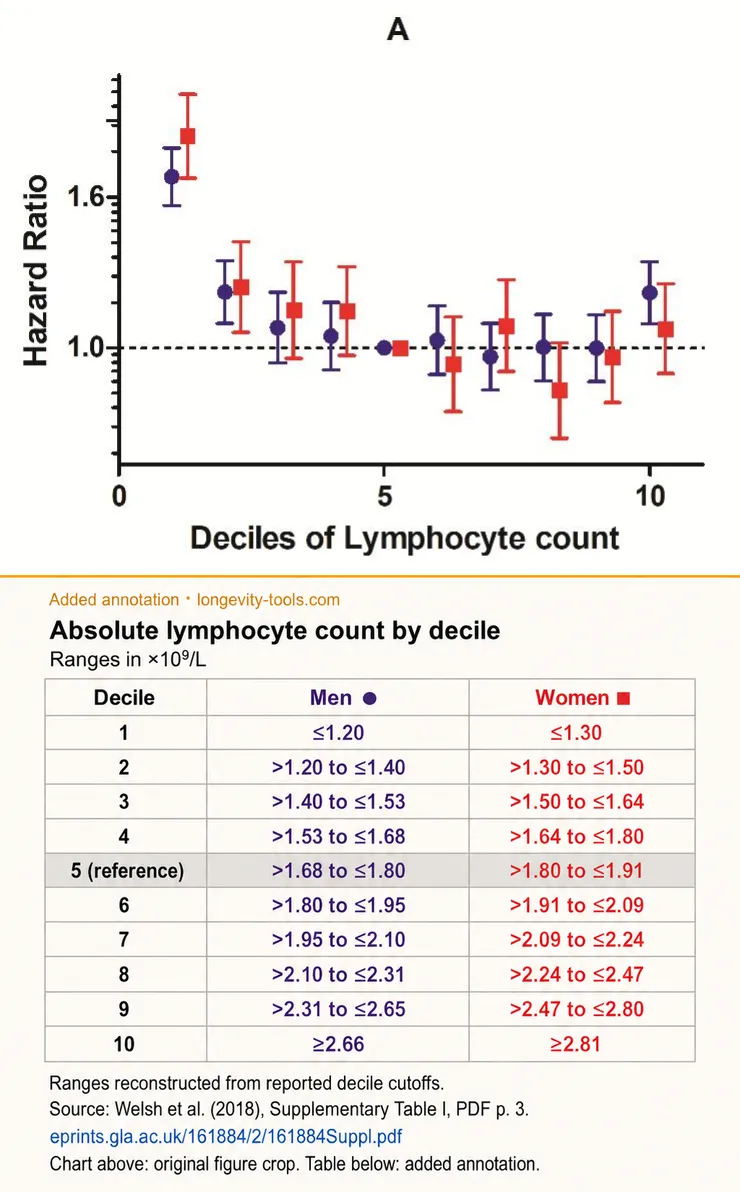
The lowest lymphocyte-count decile had the highest all-cause mortality
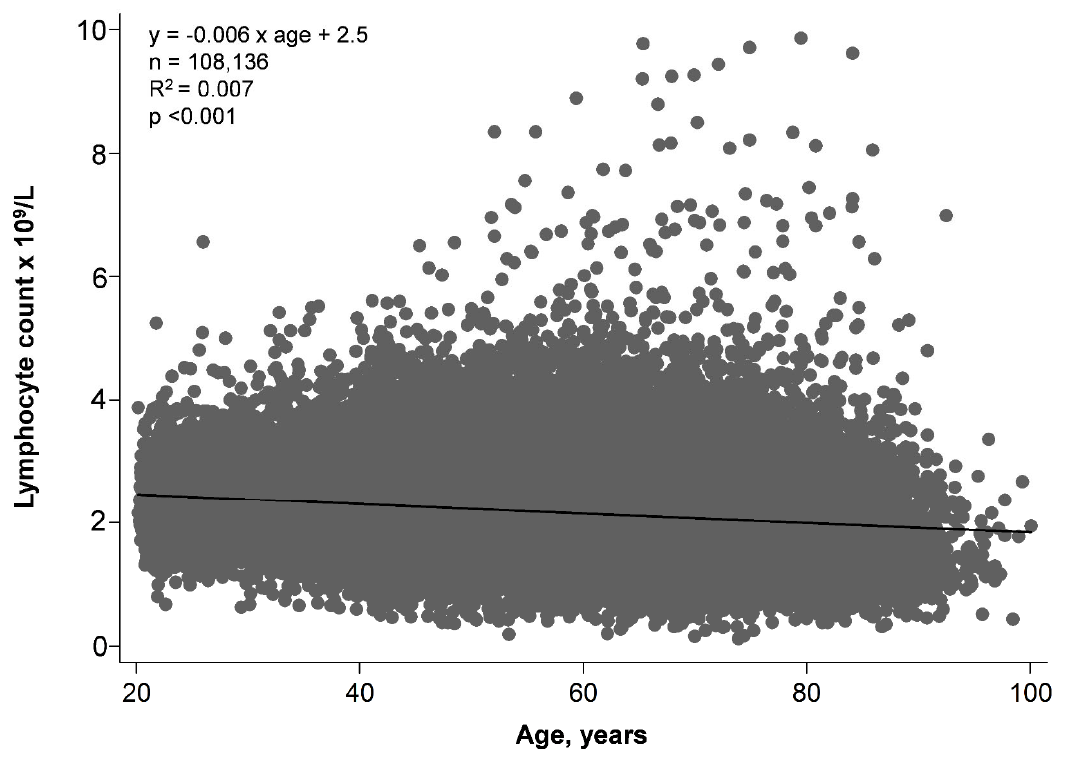
Absolute lymphocyte counts showed a small decline with age
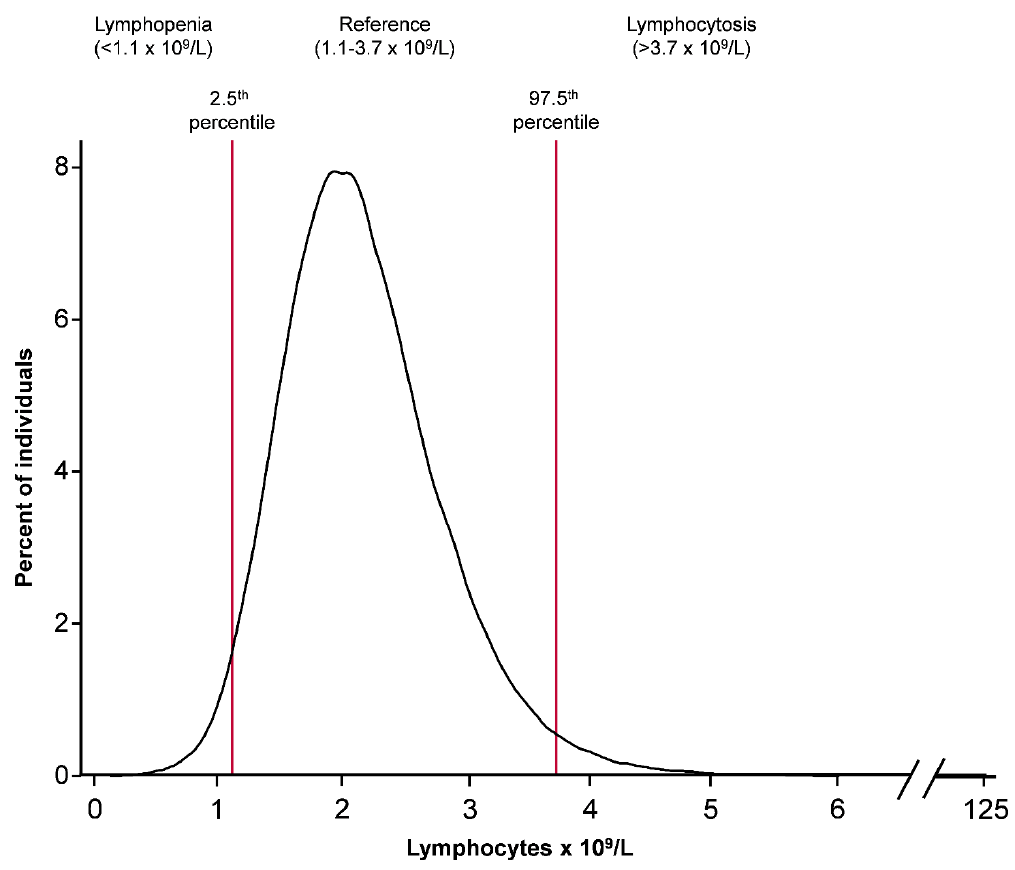
About 95% of lymphocyte counts were between 1.1 and 3.7 × 10⁹/L
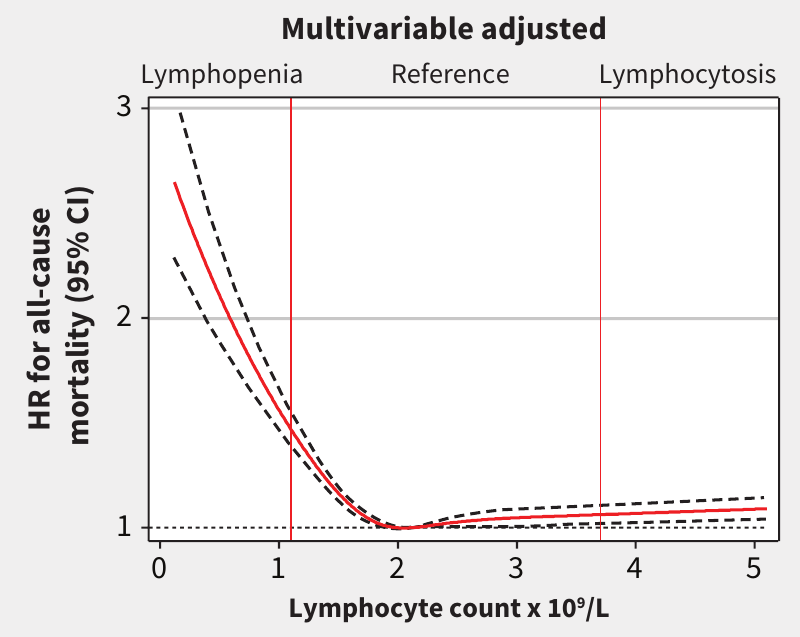
Low absolute lymphocyte counts were associated with higher all-cause mortality
Open in Browser for Full Features
Access interactive features, detailed explanations, and AI interpretations.
If printed on paper

If this is a PDF document

About the site author
My personal mission is to extend human lifespan by collectively adding 1 million years to people's lives.
That’s why I made this site 100% free, no sign-up, no email. Just instant results.
Zsolt Szabo Founder, Longevity-tools.comPrecision health consultant for labs and clinics
