
LYM
Share of white blood cells that are lymphocytes (T, B and natural killer cells). A relative value, so it shifts if other WBCs change.
Also known as:
Lymphocytes %LYM%LY%Lymphs %Lymphocytes (relative).Do not confuse with the absolute lymphocyte count (LYMabs), which reports cells per volume.
LYM ranges
Interpret your result
"Normal" lab range for LYM is between 18 and 45%:
18
45
Optimal range
Optimal range for LYM appears to be between 30 and 40%:
10
18
30
40
50
60
Why this optimal range?
Preliminary range is based on functional health organizations including but not limited to those listed above.
What a low value may mean:
Common reasons for low LYM:
What a high value may mean:
Common reasons for high LYM:
- A high percentage can reflect fewer neutrophils rather than excess lymphocytes. Common benign examples are the Duffy-null variant (benign ethnic neutropenia), more common in people of African, Middle Eastern, or West Indian ancestry, and the lower neutrophil counts seen with endurance training. Interpret alongside LYMabs and the absolute neutrophil count; percentage alone does not establish absolute lymphocytosis.
Images:
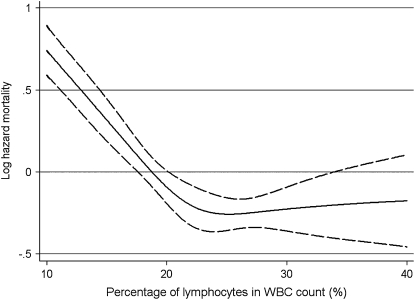
Lower lymphocyte percentage was linked to higher mortality in men with CKD
Figure 3. Adjusted log-hazard curve (solid) and 95% CIs (dashed). Men with CKD; not a general-population reference range.
1,220 participants
US male veterans with nondialysis CKD; mean age 68 years, mostly CKD stages 3–4
Dataset: Salem Veterans Affairs Medical Center nephrology cohort
Retrospective cohort study
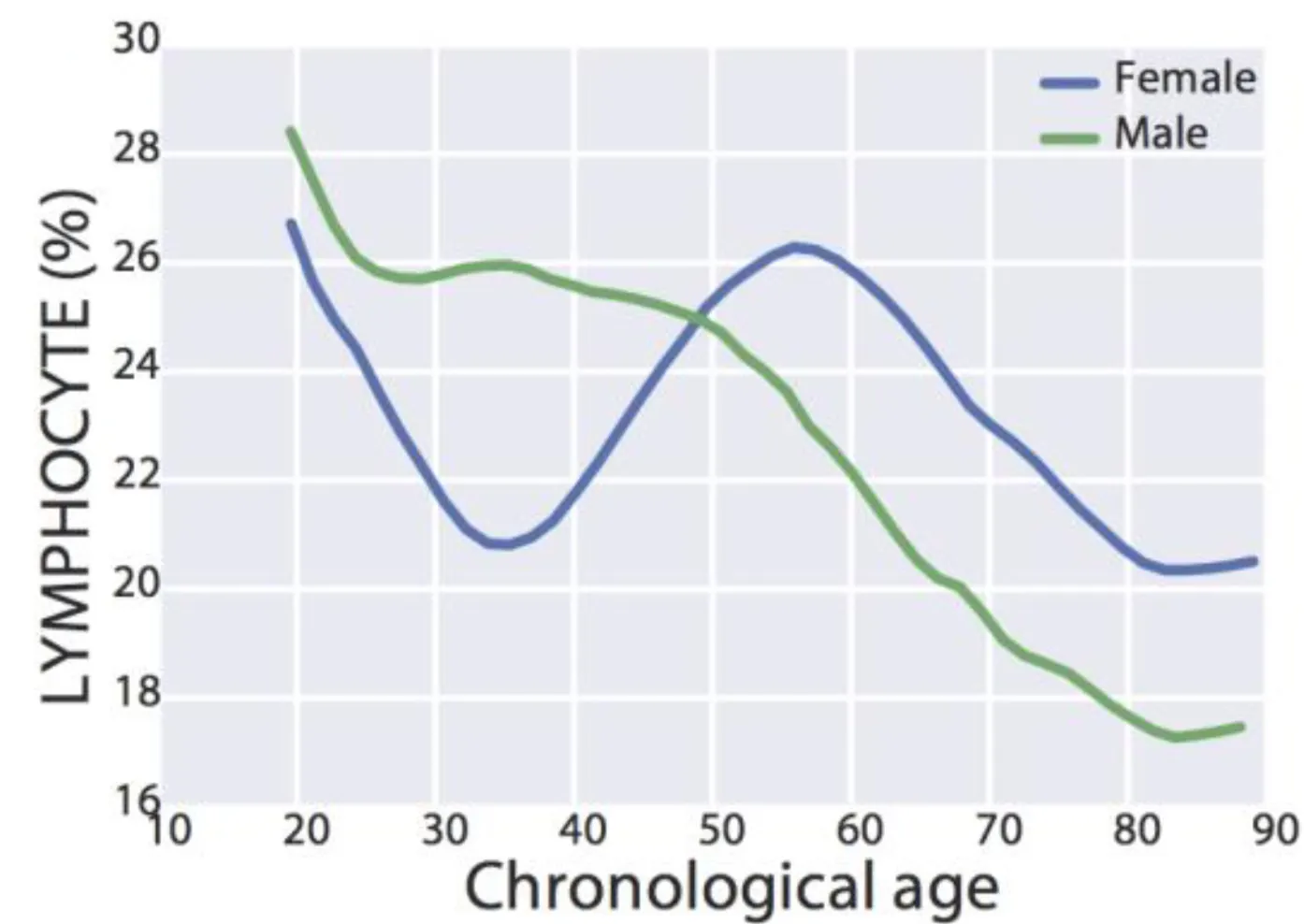
Lymphocyte percentage varied with age and was lower in older adults
Figure S1D. Smoothed age trends by sex. Hospital patient records, not a healthy reference population.
385,918 participants
Adults aged 18–100 with at least 10 visits in Mount Sinai Health System records (USA)
Dataset: Mount Sinai Health System electronic medical records
Retrospective electronic health record study with GWAS
Research suggestions are welcome.
Would you like to see more here? Please send relevant studies to the email at the bottom of this page.
Open in Browser for Full Features
Access interactive features, detailed explanations, and AI interpretations.
If printed on paper
Scan with Phone

If this is a PDF document
Click the link
(if the link does not work, use the QR code)
🔒 100% Private - No data leaves your computer after opening
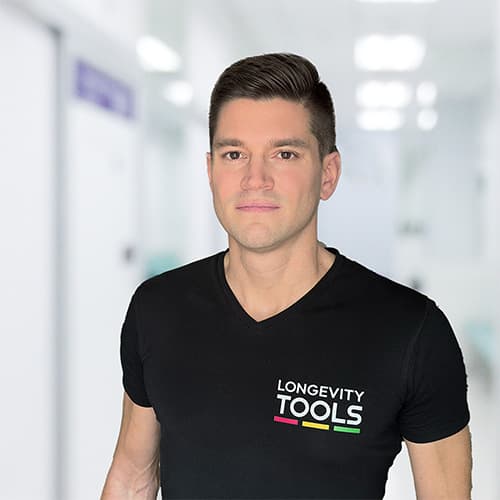
About the site author
My personal mission is to extend human lifespan by collectively adding 1 million years to people's lives.
That’s why I made this site 100% free, no sign-up, no email. Just instant results.
Zsolt SzaboPrecision Health Consultant for Longevity Clinics
Please send me relevant research and feedback.
Any feedback is welcome at .
I am particularly interested in research on biomarkers associated with all-cause mortality and on defining optimal reference ranges.